
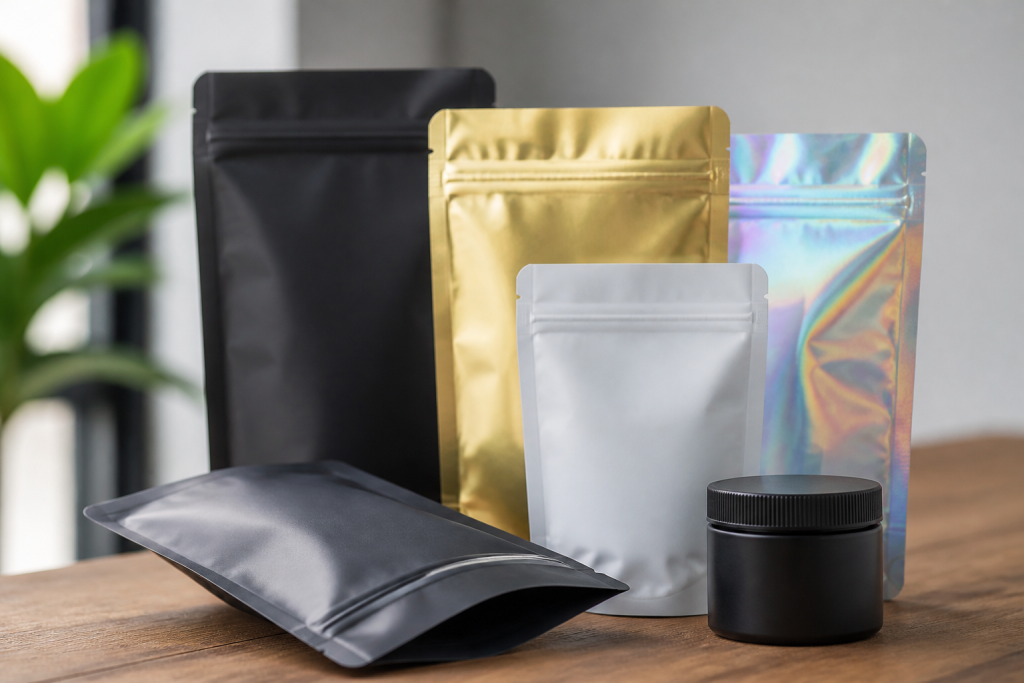
Why the ‘Cali’ pack idea persists
Ask ten people in the UK scene what is a Cali pack and you will get ten slightly different answers. Most mean a premium looking pouch or jar that borrows the California dispensary aesthetic. The better versions also protect the flower properly.
That second bit matters more than the artwork. In 2026, consumers expect aroma and appearance to hold up from filling to the final pinch. If packaging can’t manage oxygen, light and moisture, it’s just theatre.
There is also a practical reality. Cannabis and CBD products often travel through warm vans, cold storerooms and bright retail lighting. Every step punishes freshness.
Freshness is chemistry, not hype
Cannabinoids and terpenes are sensitive compounds. They degrade faster with heat, oxygen and UV exposure. Moisture swings can push flower towards either brittleness or mould risk.
Packaging is not a magic shield. It’s a set of barriers that buys time. The goal is to slow down change.
Modern flexible pouches tend to use layered films. Mylar style laminates are popular because they block light and reduce gas transfer. Rigid containers rely on wall thickness and a good closure to limit exchange.
Storage conditions still matter. A perfect bag can’t rescue a product left on a sunny windowsill.
For a quick overview of common formats used across the category, RinPac’s cannabis packaging types infographic is a useful reference point.
Choosing the format: bags, jars and tubes
Most “Cali style” packs in the UK fall into two camps. They are printed Mylar bags or branded jars. Pre-roll tubes sit alongside them for single units.
The Cali pack benefits tend to show up when the format matches the product. A multi-gram flower pouch needs different protection to a pre-roll. A vape accessory bag has different priorities again.
| Format | What it is good at | What to watch |
|---|---|---|
| Mylar style pouch | Light barrier, low bulk, strong shelf impact | Seal quality and puncture resistance |
| Rigid jar | Crush protection, reclosability, premium feel | Headspace air and lid liner fit |
| Tamper jar | Obvious interference evidence | Added plastic and disposal complexity |
| Pre-roll tube | Odour control and pocket durability | Child-resistant spec and cap consistency |
A jar often wins for fragile buds. A pouch often wins for efficient fulfilment. The best choice depends on how the product is handled after packing.
Details that actually preserve quality
It’s easy to focus on graphics. The functional parts are less glamorous. They decide whether a pack protects or merely looks the part.
Start with barrier. Film structure, thickness and lamination quality affect odour control and vapour transfer. For jars, opacity and glass type affect light protection.
Miron style violet glass is often used when brands want light filtering with a premium feel. It’s still not a licence to ignore storage temperature.
Next is closure. A zip is convenient. It’s not the same as a proper heat seal for first close. A good process uses both, where the pouch design allows it.
Tamper evidence is another separator. It signals integrity for retail and it reduces casual contamination. It also helps with returns disputes, which can get messy fast.
Child-resistant features are common in regulated markets. They require consistency. A cap that works nine times out of ten is a problem.
Design choices also affect handling. A gusseted bag can stand upright. It reduces scuffing in storage bins. That matters for presentation and for barcode scanning.
When people talk about Cali pack packaging, they usually mean this whole bundle of decisions. Material, closure and tamper evidence sit underneath the print.
So, what is a Cali pack in packaging terms?
It’s usually a high-barrier pouch or an opaque jar with bold branding and a retail-ready finish. The better examples include a reliable seal and a sensible opening size. The worst examples are thin film with a loud design.
Fill, seal, store
Protection starts before the product even goes into a bag. Handling, humidity management and cleanliness set the baseline. Packaging can only maintain what you pack.
If you’re training staff, keep the steps boring. Boring is repeatable. Repeatable is quality.
- Use clean gloves and a tidy bench surface
- Minimise time with product exposed to open air
- Seal consistently with the correct temperature and dwell time
- Store sealed units away from heat sources and direct light
People searching for how to use cali packs often want a trick. There is no trick. The win comes from process control and sensible storage.
Food Engineering has a strong practical overview in its piece on selecting the right cannabis packaging. It’s not UK-specific. The fundamentals translate well.
Sustainability without ruining the product
Sustainability claims are everywhere in 2026. Cannabis packaging is still a tough category to “green” without losing barrier performance. A pouch that leaks aroma is wasteful, even if it’s recyclable on paper.
Rigid containers can be reused. That helps, provided the consumer actually reuses them. Pouches can reduce shipping bulk. That helps too, provided the structure is not overbuilt.
Some brands move towards simpler structures and better disposal guidance. Others use post-consumer recycled content where regulations allow it. The practical question is always the same. Does it still protect the product through the full shelf life?
Sana Packaging covers these trade-offs well in its notes on sustainable cannabis flower packaging considerations.
Buying considerations in the UK
In the UK, the “Cali look” can be tempting for small brands. It can also backfire if the pack feels flimsy in-hand. If a pouch creases, scuffs or fails to seal cleanly, customers notice.
Don’t buy purely off a mock-up. Ask what film structure is being used. Confirm whether the bag is designed for heat sealing. Check whether the zip is secondary or the main closure.
Also think about your product mix. Flower pouches, pre-roll tubes and jars each need their own sizing logic. A one-size range creates wasted headspace. It also creates stale product faster.
CaliPack Pro focuses on packaging formats that suit cannabis and CBD products in a UK context. The catalogue covers Printed on Mylar Bags, Mylar Bags, Jars, Tamper Jars, Miron Jars, Pre-Roll Tubes, Vape Bags, Sticker on Mylar Bags, Custom Print on Demand and Bundles.
If your brief is literally “what is a Cali pack” in the buying sense, treat it as a shortlist of protective formats. Then judge each option on barrier, seal and handling. Style comes after that.
Frequently Asked Questions
Do Cali-style packs actually keep cannabis fresher?
They can, if the materials and seals are chosen properly. High-barrier film, a clean heat seal and sensible storage will slow terpene loss and moisture drift. A flashy design on thin film won’t.
What should I look for in Cali pack cannabis storage at home?
Keep sealed products cool, dry and out of direct light. Avoid frequent opening, since repeated air exchange accelerates staling. If you decant, use an opaque container with a reliable closure.
Are jars better than Mylar bags for quality?
Jars protect against crushing and they feel premium. Bags can offer excellent light and odour barriers with lower bulk. The better choice depends on how the product is handled after packing.
How much should I trust Cali pack reviews online?
Use them to spot recurring issues like weak zips or poor print durability. Ignore vague claims about “top shelf” that don’t mention seals, materials or storage. Packaging performance is mostly measurable, even if reviews are not.