Technology is the quiet driver behind better cannabis packaging
In 2026 cannabis packaging is being shaped more by software than by film thickness. The best cannabis packaging solutions now start with data, compliance checks and a print workflow that can cope with change.
That matters in the UK because CBD brands move fast. Hemp product packaging has to keep pace with new warnings, retailer rules and shifting consumer expectations.
At CaliPack Pro we see the difference every day. A plain pouch can sell a product once. A well-built pack system sells it every week without drama.
Modern cannabis packaging is also more technical than people assume. A Mylar bag is not just a bag. A jar is not just a jar.
There is a reason serious brands obsess over closures, barrier layers, varnishes and label adhesives. Packaging has become the product interface.
In this post I’ll focus on the tech that actually changes outcomes. Not hype. Not gimmicks.
We sell printed on Mylar bags, Mylar bags, jars, tamper jars, Miron jars, pre-roll tubes, vape bags, sticker on Mylar bags, custom print on demand and bundles. The examples will stay grounded in that catalogue.
One caveat. Cannabis packaging rules vary by country and by product type. Treat this as practical guidance, not legal advice.
Compliance pressure has pushed cannabis packaging into the digital era
In 2026 the fastest way to get a product pulled is sloppy labelling. Cannabis packaging sits under the same consumer protection expectations as food supplements and cosmetics in the UK.
If you sell ingestible CBD you can’t treat the label as “marketing space”. The Food Standards Agency has clear consumer advice on CBD intake. It also warns against making health claims. (food.blog.gov.uk)
For CBD foods the FSA recommendation is a maximum daily intake of 10 mg CBD for healthy adults. That number has become a practical baseline for cannabis product labelling discussions with retailers. (food.blog.gov.uk)
For cosmetics the UK expects a named Responsible Person and an ingredient list. If your cannabis packaging includes topical CBD products you need a workflow that can manage INCI names and address details reliably. (gov.uk)
The tech shift is simple. Brands now run packaging artwork like code. They track versions. They lock mandatory text. They approve changes through a system.
That is where small packaging mistakes are usually born. Someone exports the wrong PDF. Someone edits the net quantity line. Someone forgets to update a safety warning.
We push customers to build a “single source of truth” for cannabis packaging copy. Keep warnings, batch fields and addresses in a controlled template. Then let design flex around it.
When you want clearer recycling messages you can use the On-Pack Recycling Label guidance. OPRL rules cover component separation guidance such as “peel here”. That matters for laminated labels and multi-part packs. (oprl.org.uk)
Compliance also touches waste policy. UK extended producer responsibility is not abstract in 2026. It’s becoming an operational cost line for brands that place packaging on the UK market. (gov.uk)
So yes, cannabis packaging is about child resistance and tamper evidence. It’s also about admin and data.
Printing technology that makes cannabis packaging faster to launch
Speed wins in 2026. The brands that ship first often get the shelf space. Digital print is the reason short runs of cannabis packaging can look premium without silly set-up costs.
We see two patterns. Start-ups want “good enough” fast. Established brands want control of colour, finish and consistency across SKUs.
Custom print on demand helps when a product is still proving itself. Sticker on Mylar bags is also a sensible bridge. It lets you test cannabis packaging without committing to a full printed run.
For regulated categories you also need variable fields. Batch codes, best before dates and packer initials can be handled cleanly when your artwork is built for it.
For export markets some customers chase louder marijuana packaging designs. That can be effective in the right jurisdiction. In the UK it can backfire if the style looks youth-led.
Good cannabis packaging is often restrained. A crisp matte finish and one spot gloss detail can beat a noisy rainbow every time.
Here is a practical view of formats we sell at CaliPack Pro. Prices are indicative trade ranges in the UK for 2026. They vary by volume, spec and finishes.
| Format | Where it fits | Tech features worth paying for | Indicative unit cost (UK trade, 2026) |
|---|---|---|---|
| Printed on Mylar bags | Flower, edibles, gummies, small parts | High barrier film, zip upgrades, matte varnish | £0.35 to £1.20 |
| Mylar bags | Fast launches and samples | Heat seal integrity, clear window options | £0.10 to £0.45 |
| Tamper jars | Premium flower and concentrates | Tamper ring, liner options, consistent torque fit | £0.60 to £2.50 |
| Pre-roll tubes | Single pre-rolls and multi-packs | Child resistant closures, label area planning | £0.20 to £0.95 |
Notice what’s missing. “Cool design” does not appear as a line item. Design is assumed. The spending decisions sit in materials and process control.

Track and trace in cannabis packaging without annoying the customer
QR codes are everywhere in 2026. Most of them are pointless. Cannabis packaging is one of the few categories where a smart code can earn its keep.
If you want codes that scale, look at GS1 Digital Link. It lets a 2D code act like a barcode and a web link, using a standard syntax. (support.gs1.org)
That matters because your needs change. Today you might only link to a lab report page. Tomorrow you might need recall notices, updated warnings and retailer-only data.
GS1 also publishes practical retail guidance on 2D barcodes, including scanning performance and placement. That’s useful when you’re squeezing codes onto small cannabis packaging like pre-roll tubes. (ref.gs1.org)
Still, be skeptical. Customers don’t scan QR codes for fun. Give them a reason that feels immediate.
- Batch specific certificate link
- “How to recycle this pack” page that matches the materials used
- Authenticity check for high value SKUs
- Retailer portal link for case quantities and barcodes
There’s also a design point that gets missed. Put the code where a phone can reach it. Don’t bury it in a crease next to the heat seal.
We also recommend a plain text fallback URL. Camera apps fail sometimes. Low light fails more often.
Cannabis packaging becomes much easier to manage once the pack points to a live page. You can keep the pack stable. You can update the content safely.
Security features that move beyond the hologram
Counterfeits are not a “luxury goods” problem anymore. If your product is popular, it’ll be copied. Cannabis packaging needs at least one security layer that isn’t obvious at first glance.
Digital watermarking is one route. Digimarc describes embedded watermarks that can be repeated across artwork, which supports scanning and identification in multiple settings. (digimarc.com)
Serialization is another route. Systech describes serialization and digital authentication approaches that use unique identifiers for tracking plus counterfeit detection. (systechone.com)
On the physical side, destructible labels still do real work. If a label can’t be removed cleanly, you reduce refill fraud for jars. Avery Dennison material guidance around security labelling also covers tamper indication approaches. (label.averydennison.com)
For many UK CBD brands the biggest issue isn’t organized counterfeit networks. It’s casual marketplace resellers. They relabel. They split bundles. They sell “samples” as full packs.
So keep it practical. Use a tamper evident closure. Use a unique batch code. Make it easy for your support team to verify a customer photo.
Tamper evidence doesn’t need to look medical. It needs to be obvious when broken. The point is trust, not theatre.
Strong cannabis packaging also protects you from internal errors. Pick and pack teams make mistakes. A scan-based “right label on right pack” check catches them early.

Materials science in modern cannabis packaging
There’s a myth that packaging is just branding. In our experience the biggest wins come from barrier performance and closure choice. Cannabis packaging is chemistry management.
Mylar style laminated pouches can offer strong moisture and oxygen barriers, depending on the structure. That helps with odor control and freshness for flower products.
Jars solve different problems. They protect against crushing. They also give you a consistent label panel. That’s useful when cannabis product labelling needs legible warnings and batch data.
If you sell volatile products, light matters. Miron describes violet glass that filters parts of the light spectrum to support stability for sensitive ingredients. That’s one reason Miron jars appear in premium hemp product packaging. (miron.com)
Child resistance is another material and mechanical topic. ISO describes ISO 8317 as a child resistant packaging standard for reclosable packages, with performance requirements and test methods. (iso.org)
Don’t treat child resistance as a box-tick. It affects user experience. If a closure frustrates adults, they decant into a non-compliant container.
For pre-roll tubes, closure tolerances are where problems hide. If the cap fit varies, you’ll see cracked hinges and loose tops in transit.
Vape bags also need a clear view on barrier needs. Some products hate oxygen. Some hate heat. Some hate light. Pick the pack based on the ingredient risk, not on what looks good on Instagram.
Cannabis packaging choices are easier when you write down the enemy. Oxygen. Moisture. Light. Heat. Mishandling. Then select the format that fights that enemy.
Eco-friendly cannabis packaging in 2026 is not just kraft paper
Eco-friendly cannabis packaging is now expected, not celebrated. Customers ask about recyclability as quickly as they ask about strength.
The awkward truth is that some “eco” choices perform badly. A low barrier pouch can raise waste if it shortens shelf life. That’s not a win.
In the UK, EPR is pushing brands to take packaging waste costs seriously. GOV.UK guidance explains who must comply and what data to report. Parliament’s research brief also sets out the direction of travel on packaging EPR. (gov.uk)
That changes procurement decisions. A cheap pack isn’t always cheap once reporting and waste fees land. It also changes how brands talk to customers.
Recycling labels matter here. OPRL publishes rules on label use and component removal guidance. If your cannabis packaging has a peelable label and a separate liner, you need to communicate that clearly. (oprl.org.uk)
What does “better” look like in 2026. Fewer materials. Clear separation. Less ink coverage where it affects recyclability. More accurate consumer instructions.
Mono material films are improving. Some brands are shifting away from heavy foil structures where they can. Others can’t because barrier performance is non-negotiable.
Our stance at CaliPack Pro is cautious. We like sustainability claims that survive contact with reality. If your product is sensitive, pick protection first. Then optimize the pack structure.

Automation in fulfilment and the small details that stop returns
Cannabis packaging doesn’t end at the unit pack. The outer pack matters too. If your shipping box crushes jars, you’ll spend more on replacements than you saved on cardboard.
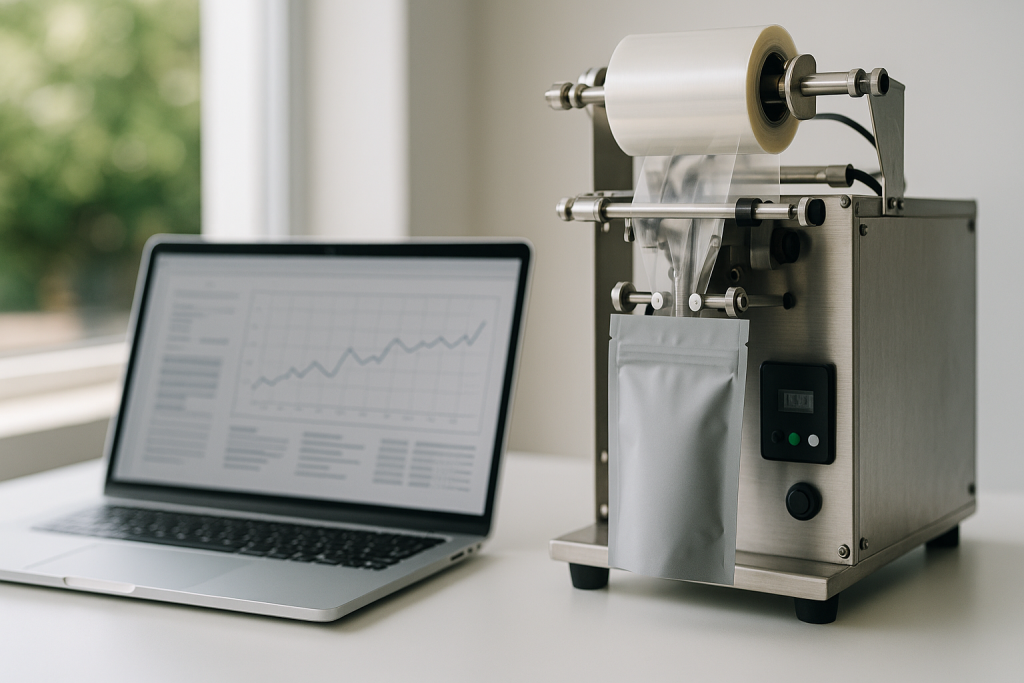
In 2026 more small brands are building semi-automated lines. They use bench top heat sealers for Mylar. They use label applicators with simple sensors. They use checkweighers and barcode verification.
The tech that pays off is boring. Print quality controls. Vision checks. A standard operating procedure that says “stop the line” when a batch code smudges.
For pouches, seal integrity is a repeat offender. A fast seal with the wrong dwell time can look fine. It can fail after a day in a warm van.
For jars, torque consistency matters. Over-tighten and you crack caps. Under-tighten and lids loosen in transit.
Most customer complaints can be grouped into a few causes:
- Smudged lot codes
- Wrong label version on the right product
- Seals that open under pressure
- Caps that loosen after vibration
We advise customers to test like a courier. Drop test. Shake test. Warm car test. Then choose cannabis packaging specs that match that abuse.
If you sell bundles, build a bundle packing spec. Use a consistent insert. Keep items from rubbing. A scuffed Miron jar label looks terrible on arrival.
Technology helps here too. A QR code can link to a packing checklist for staff. It can link to a live “how to open this closure” page for customers.
Design software and psychology at the shelf edge
Design tools changed the pace of iteration. In 2026 most brands can produce photorealistic mock-ups in hours. That’s good, provided you don’t treat mock-ups as proof.
Colour management still matters. Metallic inks behave differently on films. Matte varnish can dull bright colours. You need a print proof loop you trust.
We also see a shift toward modular artwork. One master layout. One compliance panel. Then variant colorways for flavour and strength. That keeps cannabis packaging consistent across a range.
Be careful with overseas inspiration. Some marijuana packaging designs rely on cartoon cues and neon palettes. That may be acceptable in some markets. In the UK it can look reckless.
Hemp product packaging in Britain often sells through wellness channels. Think clean typography. Think restrained colour. Think clarity on what it is and what it isn’t.
There’s also a practical design point. Leave space for mandatory changes. If you cram the label edge to edge, any new warning forces a redesign and new plates.
In 2026 consumers are also tired of vague claims. “Premium” means nothing. Show them what matters. Origin. Ingredients. Batch transparency. Recycling route.
Cannabis packaging earns trust when it’s readable at arm’s length. Tiny type is a choice. It’s rarely a smart one.

Choosing cannabis packaging solutions from a UK supplier
Buying packaging is easy. Buying the right pack system is harder. Cannabis packaging solutions should be built around your product risks and your retail channel.
Start with format selection. Pouches for speed. Jars for premium and crush protection. Pre-roll tubes for convenience. Vape bags for accessory kits.
Then define your non-negotiables. Child resistance where required. Tamper evidence where trust matters. Barrier where shelf life matters.
After that, decide how you’ll print. If you’re still iterating, sticker on Mylar bags can be the sensible first step. If you’re stable, printed on Mylar bags reduce unit handling and reduce label alignment errors.
Here is a simple decision grid we use at CaliPack Pro in 2026. It keeps cannabis packaging choices grounded.
| Your situation | Suggested route | Why it works |
|---|---|---|
| New SKU and uncertain volumes | Plain Mylar bag and high quality label | Low commitment. Fast compliance updates |
| Premium flower line with repeat sales | Tamper jar and consistent label spec | Better protection. Better shelf presence |
| High SKU count with frequent copy changes | Modular artwork and variable data workflow | Fewer redesigns. Fewer compliance misses |
| Retailers demanding transparency | GS1 style QR code and controlled landing pages | Live updates without reprinting packs (gs1ie.org) |
Ask your supplier blunt questions. What’s the lead time. What’s the tolerance on caps. How is print colour checked. What happens when a batch code field changes.
If the answers are vague, move on. Cannabis packaging isn’t forgiving when volumes rise.
Bundles can also simplify procurement. A consistent pouch and label plus shipping box spec reduces errors. It also makes staff training easier.
The next 12 months of cannabis packaging tech will be about trust
In 2026 the novelty phase is over. The tech that lasts is the tech that reduces friction for customers and operators.
Expect more standardized 2D codes, not more random QR experiments. GS1 guidance is pushing the industry toward interoperable codes that work for retail and consumers. (support.gs1.org)
Expect more scrutiny on claims. The FSA has been clear on CBD safety messaging and health claims. That will keep shaping cannabis product labelling choices. (food.blog.gov.uk)
Expect sustainability talk to become accounting. EPR reporting and recyclability assessment will influence pack formats. The best eco-friendly cannabis packaging will be the option that performs, ships well and reports cleanly. (gov.uk)
Our view at CaliPack Pro is simple. Invest in the pack system early. Build templates. Use controlled data. Keep your cannabis packaging consistent.
Fancy finishes are optional. Operational control is not.

Frequently Asked Questions
What technology matters most in cannabis packaging in 2026?
Artwork version control and variable data printing matter more than gimmicks. A reliable QR code strategy and consistent batch coding also reduce customer service issues. Cannabis packaging is now a data problem as much as a materials problem.
How do QR codes fit into compliant cannabis packaging?
A QR code can link to batch specific information, recycling guidance and authenticity checks. GS1 Digital Link is a sensible route if you want a standardized structure. (gs1ie.org)
What should be on CBD labels for UK customers?
The FSA advises healthy adults not to exceed 10 mg CBD per day from CBD foods. It also warns against prohibited health claims. Always check the latest GOV.UK and FSA guidance when finalizing cannabis product labelling. (food.blog.gov.uk)
Is eco-friendly cannabis packaging always better?
No. A lower barrier pack can increase product waste if it harms shelf life. Eco-friendly cannabis packaging works best when it reduces materials without sacrificing protection and compliance reporting.
Are Miron jars useful for cannabis and CBD products?
Miron describes violet glass that filters light in a way intended to support stability for sensitive ingredients. That can suit premium hemp product packaging where light exposure is a concern. Always test with your own formulation. (miron.com)
How can I reduce relabeling errors across multiple SKUs?
Use a modular label template with locked compliance fields and controlled variable data. Keep one approved copy deck for warnings and addresses. That approach keeps cannabis packaging consistent when you add new flavours or strengths.
Do I need child resistant closures for cannabis packaging in the UK?
Requirements depend on product type and where you sell. ISO 8317 is a recognized child resistant packaging standard for reclosable packs, which is often referenced in wider packaging discussions. Speak to a compliance professional for your exact obligation. (iso.org)