Why “Cali pack” pricing feels all over the place in 2026
If you’re still asking what is a cali pack, you’re usually trying to price up a specific look. That look is premium, bold and shelf-led. It also comes with real production costs.
In the UK, the phrase is used loosely. Some people mean a glossy printed pouch. Others mean a full packaging set with a jar, label and tamper detail.
That is why “price range” conversations get messy fast. They mix materials, print methods and order volumes into one label.
What people are paying for when they choose the Cali-style look
So, what is a cali pack in 2026 terms?
Most of the time, it means a branded cannabis or CBD pack built around a smell-resistant, resealable format. It’s designed to look intentional, not improvised.
It also signals a certain standard of finish. Think clean typography, strong colour and a closure that feels solid in the hand.
There are also practical expectations. A CaliPack Pro guide explains why modern Mylar and sealed containers became the norm for freshness and odour control. Read the packaging evolution overview.
For budgeting, it helps to break the idea into components. These are the cali pack features that tend to push a pack upmarket. Full-coverage artwork, higher barrier materials, better closures and a more premium label surface.
- Decoration method and artwork complexity
- Container material and barrier performance
- Closure type and tamper evidence
- Order volume and consistency of repeat runs
Price bands that make sense for UK brands
Talk about cali pack price in tiers, not in one magic number. The biggest swing factor is usually whether you’re paying for full custom print, or dressing a stock item with labels.
Small runs lean towards stickers and simpler finishes. Larger runs make printed packaging easier to justify. Unit cost usually improves as quantities rise.
Use this quick cali pack comparison to sense-check what you’re being quoted. It’s not a price list. It’s a cost-pressure map.
| Packaging route | Typical cost band | Where it fits | Main trade-off |
|---|---|---|---|
| Sticker on Mylar bags | Lower | Launches, test drops and multi-SKU ranges | Label application becomes a production step |
| Printed on Mylar bags | Mid to higher | Core products that need repeatable shelf impact | Artwork set-up and longer planning |
| Standard jars with labels | Mid | Flower-style presentation and premium CBD lines | Shipping weight and storage space |
| Miron jars and other premium glass | Higher to luxury | Top-shelf positioning and giftable formats | Higher handling expectations and freight costs |
| Tamper jars | Mid to higher | Brands that need a cleaner open experience | More complex components |
| Pre-roll tubes and vape bags | Lower to mid | Single units that need quick identification | Less space for large artwork systems |
Bundles sit slightly outside this table. They can reduce planning time. They can also keep your packaging look consistent across formats.
Materials that change the whole economics
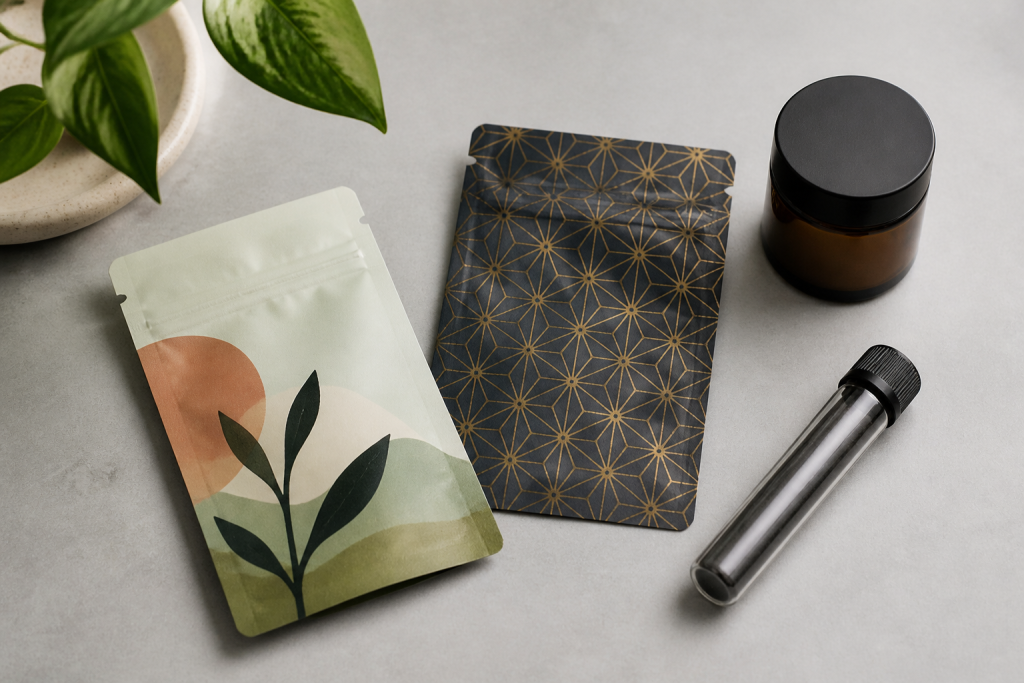
Mylar stays popular for a reason. It’s lightweight. It’s flexible. It also takes bold print well.
Glass pushes you into a different bracket. It feels more premium on a shelf. It also adds weight and breakage risk.
In January 2026, YPC Glass framed glass as the material winning the premium segment, with a focus on protection and sealing performance. See the 2026 glass packaging trends article.
For brands, the decision is rarely philosophical. It’s operational. Glass can justify a higher retail positioning. It can also slow fulfilment if your packing line isn’t set up for it.
There’s also the light question. If your product is light sensitive, darker glass and better secondary packaging start to look less like “premium”. They start to look like basic product care.
Print, compliance and the costs people forget to budget for
Most cost overruns aren’t caused by the container. They come from decisions made late in the design stage.
Full custom print needs clean files, correct dielines and a decision on finishes. If those change after approval, you pay twice. The same goes for changing barcodes, batch boxes or mandated warnings.
There’s also the compliance trap. A pack can look expensive. It can still be wrong for your market. UK CBD brands need disciplined labelling. Export brands need even tighter version control.
Security details can add cost. They can also stop headaches. Tamper evidence, consistent seals and traceable batch presentation are often cheaper than a reputational wobble.
Packaging demand is being pulled upwards by premiumisation. A May 2026 market release highlighted rising demand for luxury packaging alongside higher-end cannabis products. Read the May 2026 strategic business report release.
For a broader market backdrop, IMARC maintains a rolling overview of the sector. IMARC’s cannabis packaging market page.
A practical way to buy without wasting money
This is the part most brands skip. They start with a design idea. They only later ask how it will be manufactured.
Think of this as a cali pack buying guide for people who want the look, not the drama. Make one choice at a time. Lock the pack format first. Lock the decoration method second.
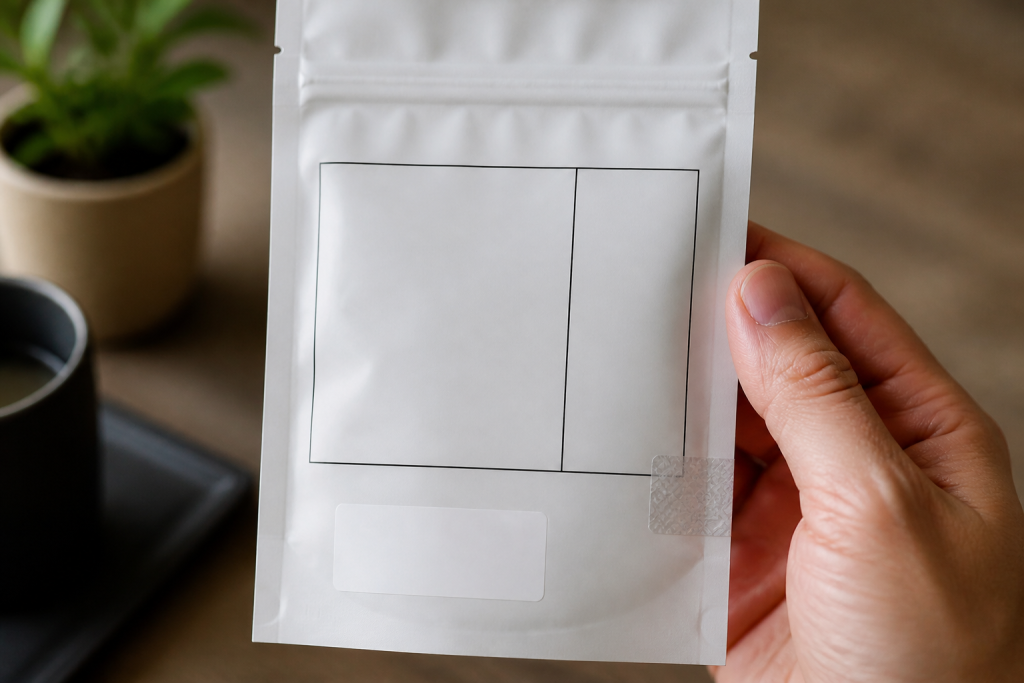
If you’re choosing between stickered packaging and full print, start with SKU count. More SKUs usually means more label logic. Fewer SKUs usually favor printed pouches.
Read cali pack reviews with a skeptical eye. Look for mentions of print alignment, seal quality and colour consistency. Ignore hype about strains or flavours. That’s not a packaging metric.
- Pick one hero format for your core product
- Choose labels for fast iteration across multiple SKUs
- Reserve premium jars for giftable, higher-margin lines
- Plan your reorder cadence before you choose print method
If you’re still unsure what is a cali pack in your own range, write down what the pack must do. Then write down what it must signal on a shelf. Price falls out of those two lists.
Frequently Asked Questions
Do Cali-style packs always mean printed Mylar?
No. The look can be achieved with stickered Mylar, jars with labels or a mix of formats. Printed pouches are common because the shelf impact is strong, not because they’re the only option.
Why do quotes vary so much between suppliers?
Quotes swing based on print method, order volume and how much pre-press work is included. Material grade and closure type also matter. Ask what’s included in artwork setup and approvals.
Is glass automatically the “premium” choice in 2026?
Glass often reads premium, particularly for jar-based presentation. It’s not always the smartest choice operationally. Freight weight, breakage risk and storage space can offset the uplift.
How can a brand keep costs down without looking cheap?
Keep the structure simple and focus spend on one or two high-impact details. Clean label design and consistent colour usually beat over-designed artwork. Avoid constant revisions after approval.