For example, think about how crunchy potato chips remain months after they were created or how long a sparkling helium balloon may stay in the air during a birthday party. Mylar, a particular shimmering plastic film that has quietly revolutionised the way goods are wrapped, is behind many of these everyday miracles. Mylar, the shimmering stuff that fills snack bags, seals long-term food stores, and even sparkles in party balloons, was first discovered in the middle of the 20th century as a scientific achievement. Since then, it has become a part of practically every area of modern life. This is the story of how Mylar was made and how it became the most preferred material for packing everything from space missions to common kitchen items.
The Middle Ages saw the start of Mylar
Scientists at DuPont’s research labs started working on a new kind of strong, flexible film called Mylar in the early 1950s. They produced a kind of polyester film that is formally called BoPET, which stands for “biaxially-oriented polyethylene terephthalate.” In short, it’s a piece of plastic film that has been pulled in two directions to make it stronger. Around 1954, the DuPont team brought this film to the world and called it “Mylar.” They built on work done by ICI in Britain and other companies. It didn’t take long for others to see that it was a terrific substance. Even though it is quite thin, mylar film is very robust. It can handle chemicals and heat, and it doesn’t tear easily. It can also be clear or have a metal covering that makes it look like glass. It also keeps out air and moisture, which is highly crucial for later usage, especially when it has a thin film of aluminium on it.
It didn’t take long for scientists and engineers to figure out high-tech ways to use the new film. Eastman, a well-known company in photography, first employing Mylar as a robust basis for photographic and X-ray film in 1955. It even let aerial reconnaissance cameras use film reels that were longer than usual. Around the same time, in 1953, Buckminster Fuller, a visionary architect, tried to use Mylar as a light skin for a geodesic dome. And maybe the most shocking thing is that the space pioneers of the time saw Mylar’s promise. NASA’s Echo 1 satellite in 1960 was just a big balloon constructed of metallised Mylar that could bounce radio signals back. It was a sparkling 100-foot ball that went around the Earth as an early communications satellite. The Echo 2 balloon, which came out in 1964, was 40 meters long and consisted of Mylar film and aluminium foil. People thought Mylar was a material from the future because of its space-age history. It is very strong, reflective, and airtight, even outside of Earth’s atmosphere.
Starting Out in the Packaging Industry
Even while these flamboyant first uses were excellent, Mylar’s biggest impact on the globe was still to come, right here on Earth, in the mundane realm of packing. Companies learned in the 1960s and 1970s that Mylar could solve difficulties with packaging that had been there for a long time. In the past, you had to use heavy, rigid containers like cans and glass jars, or cheap, flexible wraps like waxed paper and cellophane that let air and moisture in to keep food fresh for a long time. Everything changed when Mylar film came out. It kept out oxygen, moisture, and light almost as well as metal cans or foil, but it was lighter and more flexible. This was a slow alteration in how things were put together. They started off using plain flat Mylar bags, but they didn’t look nice on store shelves. Companies began to add things like gusseted bottoms (to keep pouches upright) and later zipper seals and valves, which resulted to the contemporary stand-up pouch. An Italian business invented a one-way degassing valve in 1960 that sealed freshly roasted coffee in Mylar bags. The valve lets CO₂ escape but not air. This revolutionary concept makes it possible to sell coffee in flexible Mylar bags without the gases inside spoiling the coffee. This was a huge step forward that helped coffee firms cease using cans.
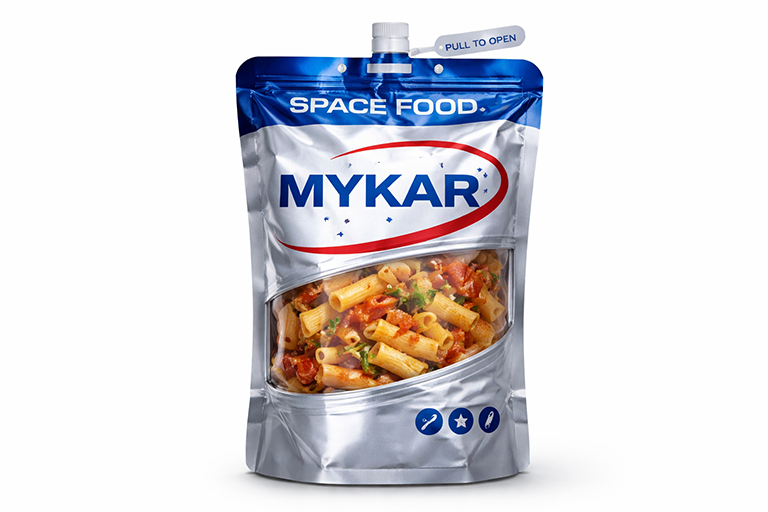
In the 1970s and later, food companies employed Mylar packaging for all types of goods that needed to stay fresh on the shelf for a long period. Snack makers found out that chips and crackers stayed crisp when they were enclosed in metallised Mylar bags that kept out air and moisture. The glossy bags for chips and the silver pouches inside cereal and cracker boxes are two iconic examples. These are commonly made of Mylar (PET film) with thin foil on top because they are “almost oxygen-proof,” which keeps the contents fresh and crunchy. Mylar layers make drink pouches, like Capri Sun, robust and keep them from leaking. They are also safe for kids and light. Kellogg’s is well-known for changing the foil wrap on its Pop-Tarts pastries to Mylar pouches to keep them fresher for longer. Flexible “foil” pouches took the place of cans in the corporate world. Mylar’s barrier film worked just as well as metal to keep food safe, but it was considerably easier to use.
Mylar was used for more than just snack packing. People rapidly started using it to package medicines and other things that go bad quickly. Mylar-based blister packs or pouches are widely used to keep medical supplies and medications that need to stay dry and clean. Farmers started putting seeds in Mylar envelopes to keep them safe from moisture and oxygen that may harm them. The military and NASA also helped push for new ways to package things. In the late 1970s, some canned foods were replaced by retortable Mylar-based pouches. These pouches could be cleaned and then stored for years, which made things easier for both soldiers and astronauts.
Getting to Every Part of Business
Mylar spread to many corporate and consumer purposes once the food sector showed that it was useful. In the 1980s and 1990s, a lot of novel flexible packaging solutions were produced with Mylar and other comparable materials. These featured drink packets, microwaveable freezer bags, and more. It was evident why: Mylar films made packaging that were robust but thin, could fold flat when empty, weren’t likely to shatter or puncture easily, and could be printed with brilliant colours and logos. Businesses of various sizes started using Mylar pouches for more than simply food. They were used to wrap up electronics, cosmetics, hardware, and anything else that needed a wrap that would protect it and show if it had been tampered with. By the 21st century, the technology had gotten so good that you could even build your own forms and designs. For example, specialist companies can acquire die-cut Mylar pouches shaped like characters or logos that will capture people’s eyes and help their items stand out on stores.
In several applications that had nothing to do with packaging, Mylar became a household word, indicating how far it had drifted from its original use. People commonly call those bright helium balloons that appear like mirrors “foil balloons.” In reality, they are constructed of metallised Mylar. Also, the thin Mylar sheets in first aid kits that are used as reflective emergency blankets retain body heat in and prevent wind. In 1964, NASA made them for the space program. People also used Mylar to gather trading cards and other things. For instance, Pokémon and Magic: The Gathering use a Mylar film layer to generate their flashy holographic card designs. Archivists protect significant papers and images at libraries and archives by putting them in clear Mylar wrappers. The film won’t break down or react over time because it is chemically stable. Mylar film is probably in the heat-reflective uniform of a firefighter or the insulation in the attic of a house. It reflects and insulates to help keep heat in or out as needed. Mylar had really left the lab and was now a material that people use every day, in fields like farming and aerospace.
People began to use “Mylar” as a general term for any shiny plastic film, just as they do for “Tupperware” for containers or “Thermos” for vacuum flasks. This is true even though DuPont Teijin Films still owns the Mylar trademark. This general acknowledgement revealed how ubiquitous the material had grown. Mylar had proven its worth time and time again, in both high-tech and common goods.
What Made Mylar a Well-Known Name in Packaging
What made Mylar the greatest material for packaging, especially for food and products that need to endure a long time? The answer is that it has a unique mix of traits. Mylar is an excellent way to keep things from going bad, like air, moisture, and light. A Mylar pouch that is well-sealed lets nearly no air or water vapour through. It also keeps out UV rays if it has a metal coating on it. Food that is sealed in Mylar can last a long time. You may store dried goods like rice, beans, or powdered milk in Mylar bags for 10, 15, or even 25 years and they will still be safe to eat. People who want to be ready for anything and keep food for a long time enjoy Mylar bags since they last so long. Companies who offer meals that have been freeze-dried or dehydrated also like them. Mylar doesn’t simply keep smells and tastes in; it also keeps odours and tastes out. For example, coffee stays strong-smelling in a Mylar bag, and spices don’t lose their strength over time. On the other hand, older packaging materials like cellophane or plain plastic would let flavours fade or moisture build up over time, which would make the shelf life shorter. Mylar revolutionised that by making the “best by” date on products last considerably longer.
It’s also quite sturdy and will endure a long time, which is another great plus. Mylar film is highly tough and doesn’t rip or tear readily unless you cut it on purpose. If you bend foil, it will shatter or split. But metallised Mylar is sturdy and won’t break if you drop it. You can also use Mylar pouches in the microwave (like microwave popcorn bags with Mylar susceptor linings) or boil or bake them (like oven roasting bags) without the packaging melting. Mylar is a kind of polyester, thus it doesn’t modify the taste of food or react with oils or acids that are in food. This level of safety and cleanliness was particularly critical for encouraging people to use it in the packaging of food and drugs.
Mylar was inexpensive and handy for business. It is much lighter than glass or metal packaging, which saves money on shipping and makes it easier for individuals to carry parcels. It also sealed well, especially when it was covered with a thin coating of heat-sealing plastic like polyethylene. This makes it possible for machines that package things automatically to close them rapidly and get rid of air. Manufacturers found that by mixing Mylar with other materials, such a thin layer of aluminium foil or a coating, they could acquire the exact qualities they required for less money than if they used thick foil or stiff plastic by itself. The result was a multitude of laminate films that might be used for different things. Some were harder to puncture, some were clear to show off the product, while others had matte finishes to show off the brand. They all had a Mylar base. By the 1980s and 1990s, the “foil pouch” or “plastic foil” form of packet (typically composed of metallised PET like Mylar) had mostly replaced conventional tin foil wraps and many paper packets for goods like chips, candy, coffee, powdered mixes, sauces, and more. Mylar had practically all the positive characteristics about aluminium foil, such being bright and not letting air through, but none of the bad aspects, like being heavy and breakable.
Lastly, Mylar wrapping made things stand out in the world of advertising. You can print vivid colours and even holographic patterns on the film, which lets you make designs that you couldn’t make on plain brown paper or transparent cellophane. People sometimes use mylar to print things like a bag of holiday-themed chocolates with glossy red and silver swirls or a pouch of luxury coffee with a shiny branding. It was easy to sell Mylar to both producers and consumers since it looked attractive and had valuable properties.
Legacy and Long-Term Effects
The fact that Mylar went from being made in a DuPont lab to being everywhere in kitchen cabinets is a great example of an invention that went beyond its initial function. It started out as a powerful film for specific uses, surprised people in space and science, and eventually altered how we secure objects we use every day. You undoubtedly have Mylar in a number of places about your house right now. For example, the glittering seal on a yoghurt cup, the pouch of trail mix in your rucksack, the ornamental balloon that is slowly sagging from last week’s party or the silver blanket that is folded up in your car’s emergency kit. Each one highlights how adaptable the material is and how it has revolutionised the way people shop and how packaging works.
The narrative of Mylar is still going on. Manufacturers continually coming up with new concepts, such as thinner films, versions that can be recycled or broken down, and better barrier coatings. They are attempting to discover a way to have things work well while also being good for the environment. But the basic reasons Mylar became so popular are still true: it keeps our food fresh, protects our possessions, and even saves lives in situations. It’s also extraordinarily thin, light, and flexible. Not bad for something that was first made in the 1950s and went from being a lab oddity to a current packaging star. Mylar is undoubtedly part of the answer anywhere goods need to last a long time and stay safe. It’s lovely to think about how this small shining film made it all possible while we enjoy our fresh coffee or crispy chips.
Sources: Mylar’s history and uses at DuPont; early uses by Kodak and NASA; new ways to package food in the 1960s and 1970s; Mylar’s modern commercial uses and benefits in packaging; benefits of long-term food storage; differences between Mylar and foil; and how widely used Mylar is in consumer products.